
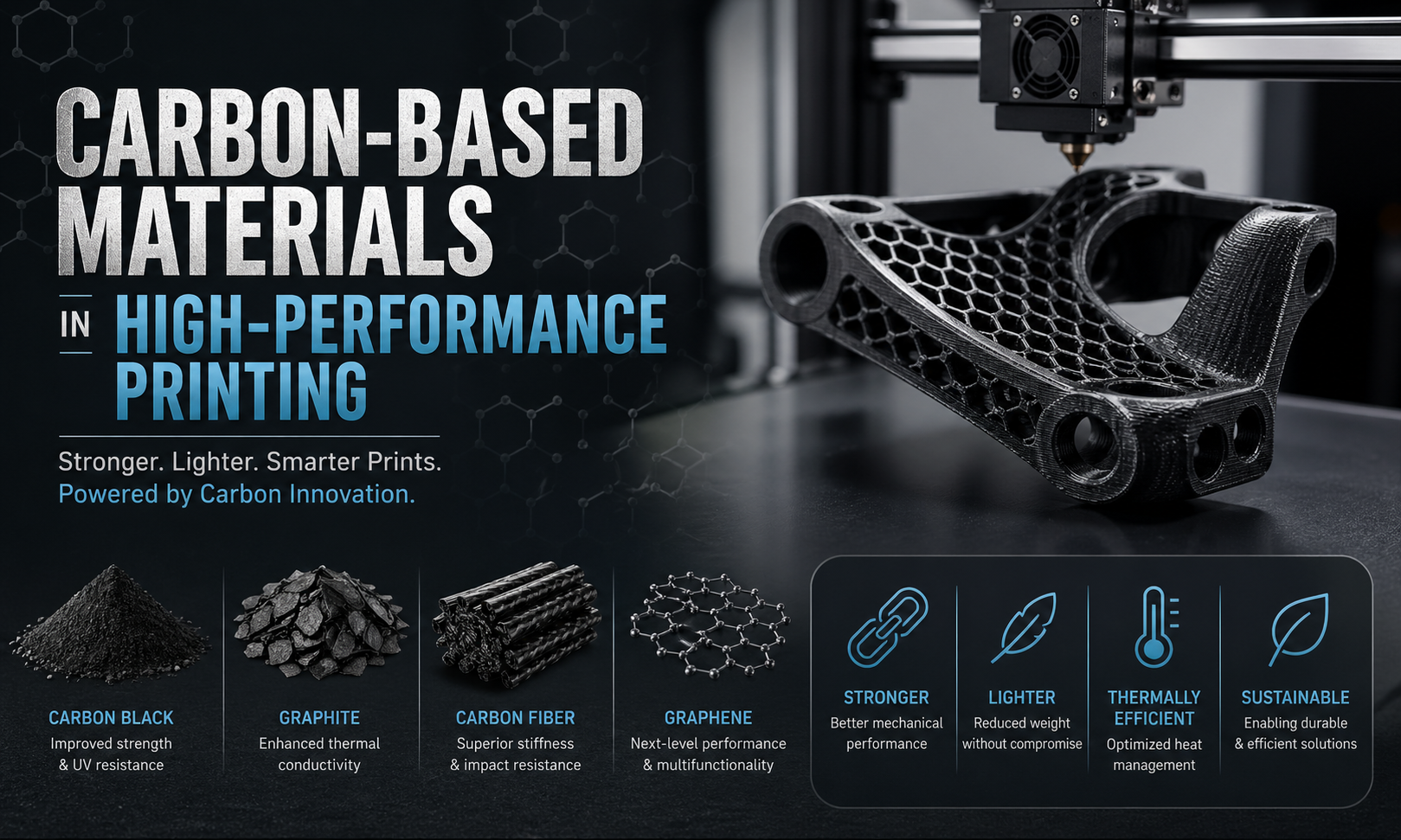
Printing technologies have advanced significantly with the evolution of material science. Modern printing systems require inks that offer precision, conductivity, durability, and consistent performance across multiple substrates. One of the most critical innovations in this field has been the use of carbon black ink, which enhances printing efficiency while supporting high-performance applications in electronics, packaging, and industrial printing.
Conductive Performance Enhancement in Printing Technologies
Carbon-based materials play a significant role in improving the conductive capabilities of inks used in advanced printing systems. Manufacturers increasingly collaborate with a reliable carbon conductive ink supplier to obtain materials that deliver stable conductivity and consistent printing quality across production cycles. These suppliers ensure that conductive carbon particles are engineered with controlled particle size and surface chemistry, allowing better integration with modern printing methods.
Electrical Conductivity Optimization
Carbon-based materials enable inks to deliver strong electrical pathways required for functional printing applications.
- Stable Electron Flow Across Printed Surfaces
Carbon particles provide a reliable pathway for electrical conduction once printed and cured on substrates. Their structure allows electrons to travel efficiently across the printed layer, supporting applications such as printed circuits, RFID tags, and electronic labels. This stability ensures long-term reliability of printed electronic components. - Compatibility With Multiple Printing Techniques
Conductive carbon materials perform effectively across printing technologies such as screen printing, flexographic printing, and inkjet systems. Their adaptable nature ensures that the inks maintain conductivity without compromising print resolution or production speed. This flexibility helps manufacturers integrate conductive printing into existing production lines. - Thermal Stability During Processing
Many printing processes involve curing or heating stages that can affect ink performance. Carbon-based conductive materials maintain their structure and conductivity even under elevated temperatures. This characteristic helps ensure that printed circuits or functional layers retain their electrical performance after processing.
Print Quality and Pigmentation Stability
Achieving consistent color intensity and visual clarity remains essential for high-performance printing. Carbon-based materials contribute significantly to pigmentation stability and print uniformity across diverse substrates.
High-quality carbon black ink is widely used because it delivers deep black pigmentation while maintaining dispersion stability within ink formulations. Its fine particle structure allows inks to produce sharp images, strong contrast, and uniform coverage, making it ideal for packaging, labeling, and high-resolution printing applications.
Consistent Color Depth and Dispersion
Carbon particles enhance visual quality and maintain uniformity throughout the printing process.
- High Pigment Strength for Rich Black Shades
Carbon-based pigments offer exceptional tinting strength, enabling inks to produce deep black tones with minimal material usage. This property ensures a strong visual impact while maintaining efficiency in ink formulation and application. - Uniform Particle Distribution in Ink Systems
Proper dispersion of carbon particles prevents aggregation and sedimentation in ink formulations. Uniform distribution allows printers to achieve consistent print results across long production runs, reducing defects such as streaking or uneven coloration. - Resistance to Fading and Environmental Degradation
Carbon pigments are chemically stable and resistant to ultraviolet exposure. This stability ensures that printed materials retain their color intensity even when exposed to sunlight, moisture, or temperature fluctuations.
Durability and Mechanical Strength in Printed Layers
Carbon-based materials significantly improve the durability of printed layers, making them suitable for demanding industrial environments.
By collaborating with a specialized carbon conductive ink supplier, manufacturers gain access to carbon materials engineered for strong adhesion and mechanical resilience.
Structural Integrity in Industrial Printing
Carbon-based inks strengthen printed layers and extend the life of printed components.
- Enhanced Adhesion to Diverse Substrates
Carbon materials help inks bond effectively to surfaces such as plastics, metals, paper, and flexible films. Strong adhesion ensures that printed patterns remain intact during transportation, handling, or product use. - Improved Abrasion Resistance
Printed materials often face friction during packaging, shipping, or industrial handling. Carbon-enhanced inks provide protective characteristics that prevent printed layers from wearing off easily, maintaining readability and functionality. - Long-Term Mechanical Stability
Carbon particles reinforce the structural integrity of printed films. This reinforcement helps printed circuits, markings, and conductive traces remain stable even under repeated bending or mechanical stress.
Functional Printing for Advanced Applications
Carbon-based materials enable functional printing applications that extend beyond traditional graphics or labeling. Functional printing involves depositing materials that perform electronic, sensing, or protective roles directly on surfaces.
Integration Into Emerging Technologies
Carbon-based inks help enable new capabilities across modern printing technologies.
- Printed Electronics and Circuit Components
Functional inks containing conductive carbon particles allow manufacturers to print circuits directly onto flexible or rigid surfaces. This capability reduces the need for traditional circuit manufacturing methods and enables lightweight electronic devices. - Sensors and Smart Packaging Solutions
Carbon-based conductive inks support the development of printed sensors that detect environmental changes such as temperature, humidity, or pressure. These sensors are increasingly used in packaging to monitor product conditions during storage and transportation. - Flexible and Wearable Device Manufacturing
Carbon materials enable conductive patterns that remain stable even when applied to flexible substrates. This property supports the production of wearable electronics and flexible displays where mechanical flexibility is essential.
Process Efficiency in Modern Printing Systems
Beyond functional benefits, carbon-based materials also contribute to improved efficiency in printing operations. High-performance inks must deliver consistent results while supporting fast production speeds and minimal downtime.
Operational Advantages in Ink Formulation
Carbon-based materials contribute to efficient and reliable printing processes.
- Stable Ink Rheology for Smooth Printing
Carbon particles help maintain balanced viscosity within ink formulations. Stable rheological properties allow inks to flow evenly through printing equipment, ensuring consistent deposition and reducing clogging or equipment issues. - Reduced Material Waste During Production
Because carbon pigments provide strong color intensity and conductivity, smaller quantities of material are required to achieve desired performance levels. This efficiency helps reduce waste and improve cost management in large-scale printing operations. - Compatibility With Automated Manufacturing Systems
Modern printing facilities rely heavily on automated production lines. Carbon-based inks are formulated to perform consistently under automated printing conditions, supporting high-speed output without sacrificing quality.
Conclusion
Carbon-based materials have become a foundational component of high-performance printing technologies. Their ability to deliver conductivity, strong pigmentation, mechanical durability, and formulation stability makes them indispensable for modern printing applications. As industries continue expanding into printed electronics, smart packaging, and functional materials, the importance of advanced carbon-based ink systems will only grow.
Within this evolving landscape, global material innovators such as Birla Carbon continue to drive progress by developing high-quality carbon materials that enhance printing performance and reliability. Through continuous research and material engineering, the company supports manufacturers seeking advanced solutions while also exploring sustainable innovations such as carbon black alternatives that align with the future of responsible material development.


